
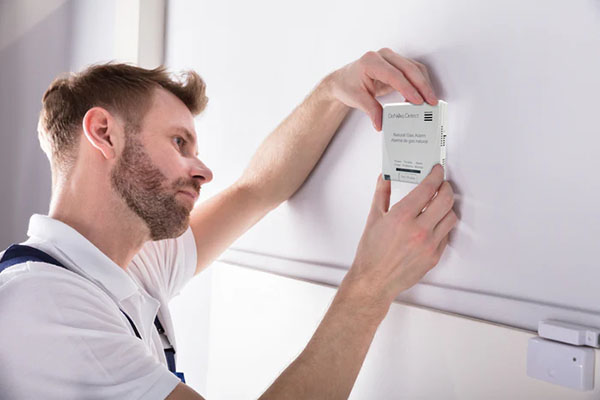
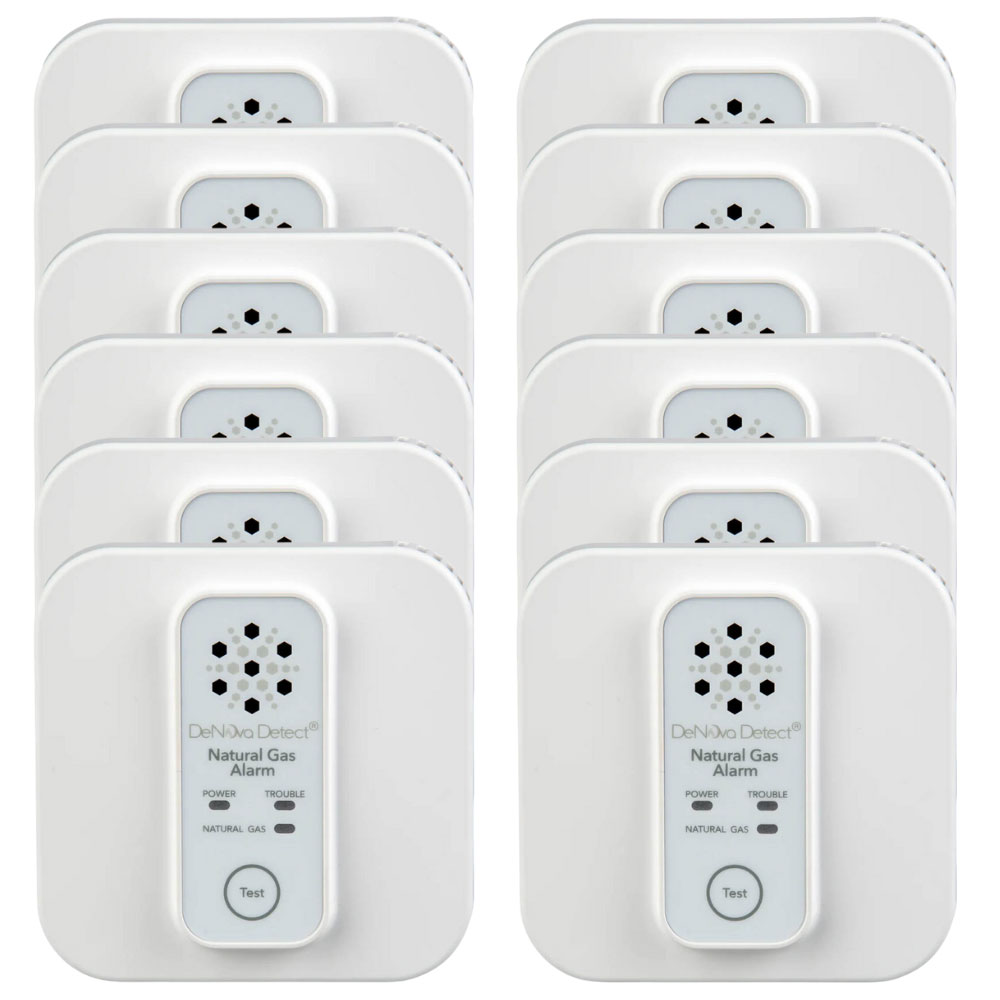
Bundle of Twelve DeNova Detect 10 Year Battery Natural Gas Alarms - DD620NV
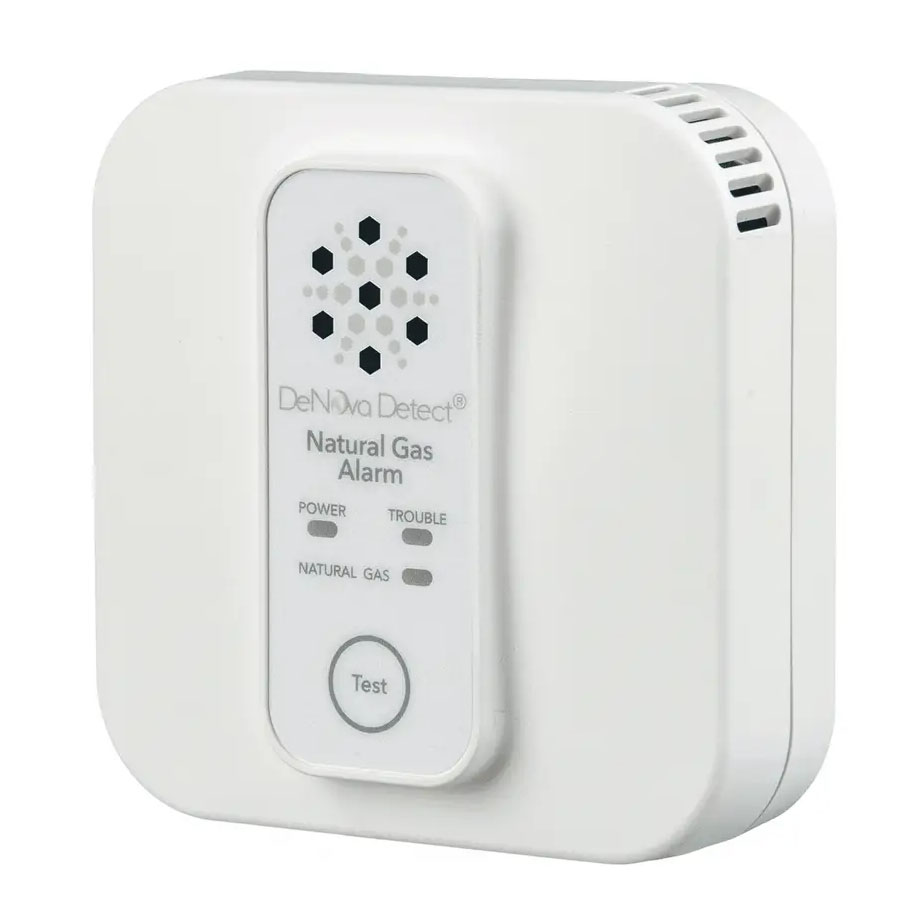
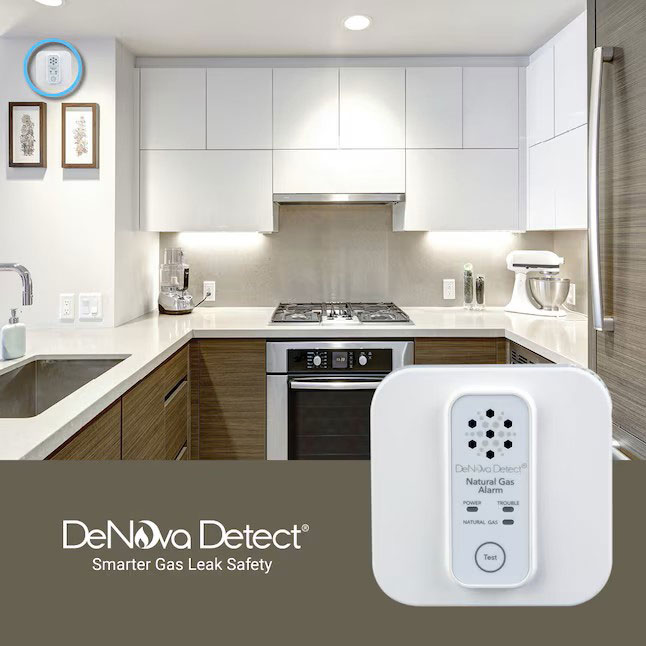
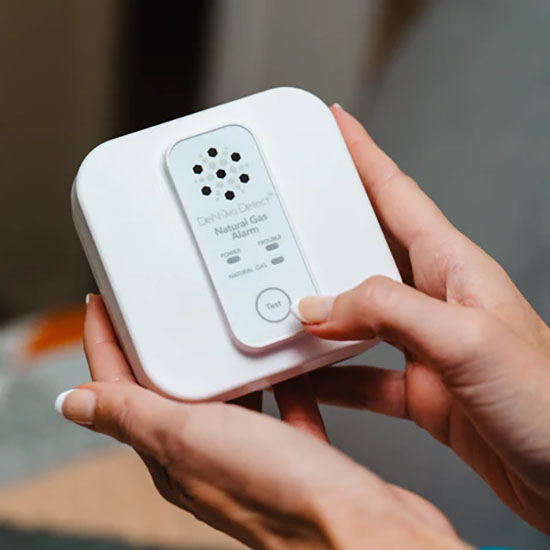
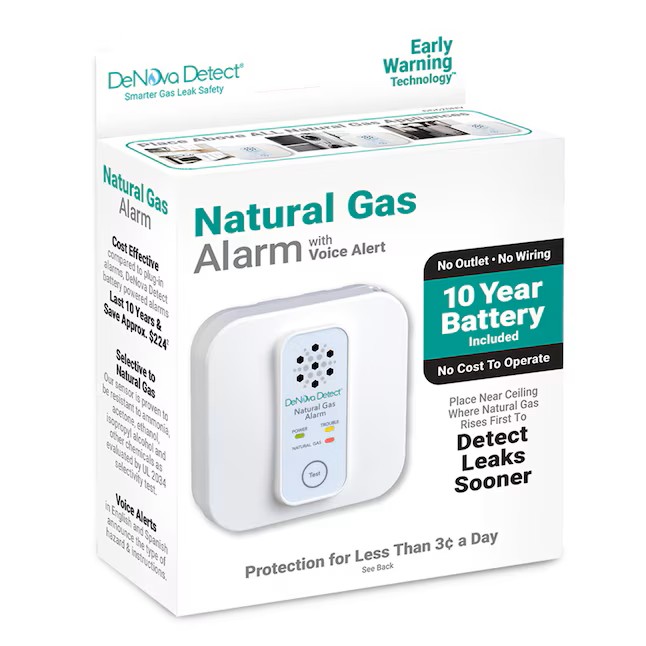
DeNova Detect 10-Year Battery-Powered Natural Gas Alarm Product Description
Innovative 10-Year Battery Life and Safety
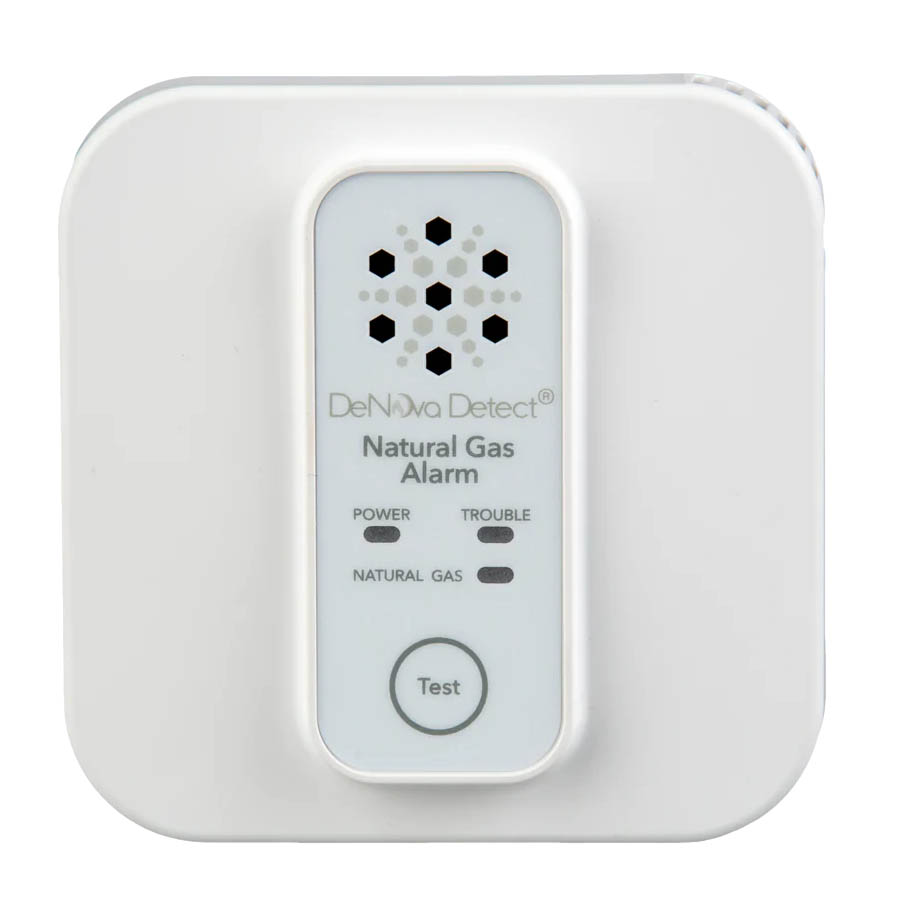
The DeNova Detect DD620NV is America’s first natural gas alarm powered by a 10-year sealed lithium battery, offering a decade of continuous protection without the need for battery replacements. This standalone home natural gas detector is a critical safety addition for any residence using methane, providing maintenance-free monitoring for ten full years. Because it is 100% wireless, you can buy natural gas alarms that offer flexible installation options, ensuring your home remains protected even during power outages.
Advanced MEMS Technology for Faster Warnings
Equipped with state-of-the-art Micro-Electromechanical System (MEMS) sensors, this natural gas leak detector provides the fastest notification on the market. It is calibrated to sound at a low 10% LEL (Lower Explosive Limit), granting residents an average of 11 minutes more escape time compared to traditional detectors. This advanced natural gas detector for home use is also specially engineered to be "spray-resistant," virtually eliminating the nuisance of false alarms caused by common household items like hairspray, cleaning agents, or cooking vapors.
Optimal Placement and Bilingual Alerts
Designed to meet the rigorous NFPA 715 installation standards, the DD620NV’s battery-operated design allows it to be mounted high on the wall within 12 inches of the ceiling where gas first accumulates. This natural gas detector features a powerful 85 dB siren accompanied by clear voice alerts in both English and Spanish, providing specific instructions to evacuate and call 9-1-1. Its easy-to-install bracket and compact profile make it the ideal choice for kitchens, basements, or any room with gas-burning appliances.
Building Code & Safety Standard Compliance
Unlike traditional plug-in natural gas alarms that are stuck near the floor where outlets reside, the DeNova Detect DD620NV is battery-powered, allowing for compliant installation within 12 inches of the ceiling where methane rises first. This design satisfies NFPA 715 standard installation guidelines and fulfills mandatory requirements under NYC Local Law 157 and state-level fuel gas detector regulations.
The DeNova Detect Natural Gas Detector should be installed in all rooms where a methane gas leak may occur or a natural gas appliance is located. Mounts easily to any wall using the included screw or can be secured to a pipe with cable ties. For best performance and NFPA 715 compliance, install within 12 inches of the ceiling and 3 to 10 feet away from any natural gas appliances. No wiring or outlet access is required.
- Kitchen (natural gas leaks from gas ovens and cook tops)
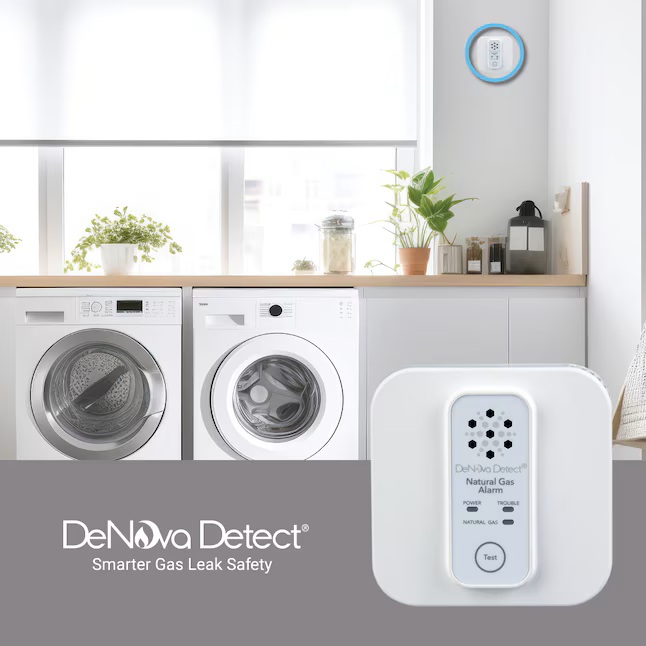
- Laundry Room (natural gas leaks from a gas clothes dryer)
- Furnace area (natural gas leaks from furnace burners, water heaters or boilers)
- Room with a Natural Gas Fireplace
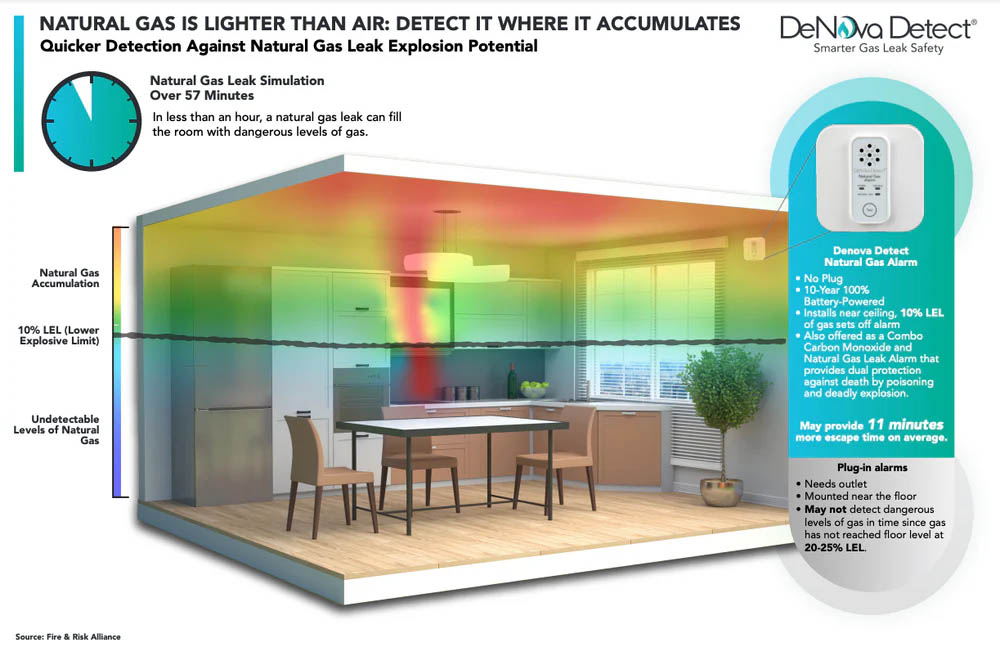
Natural gas is primarily composed of methane (CH₄), a colorless and odorless gas that is lighter than air. Because methane's molecular weight is about 16 compared to air's average weight of around 29, it naturally rises and accumulates near the ceiling when released indoors. This is why natural gas leaks often concentrate in upper areas of a room or along ceilings. Examples would include kitchens, utility rooms, or near natural gas appliances.
While utility companies add a sulfur-based odorant (mercaptan) to natural gas to help people detect leaks by smell, not everyone can rely on scent alone. Individuals with a reduced sense of smell, or leaks that develop slowly over time, may go unnoticed until gas levels become dangerous. A natural gas alarm continuously monitors the air for low-level gas concentrations and provides early warning before levels reach the explosive threshold. This allows for valuable extra minutes to evacuate safely and call for help.
Since natural gas rises, alarms should be mounted high on the wall or close to the ceiling near potential leak sources like stoves, furnaces, or water heaters. Placing a certified unit at the correct height ensures faster detection and full compliance with NFPA 715 installation standards. This high-mount positioning is also critical for properties requiring NYC Local Law 157 compliant gas detectors.
Natural gas alarms are a small but critical part of home and building safety. They not only detect leaks early but also reduce the risk of explosions, fires, and carbon monoxide exposure in homes that use natural gas for heating or cooking.
Modern units like DeNova Detect's 10-year battery-powered models provide continuous protection without needing low wall outlets or battery changes. This cordless, ceiling-mount design ensures full Fuel Gas Detector Act compliance, satisfies Illinois HB 3652 gas detector requirements, and helps property managers meet evolving landlord natural gas detector requirements nationwide.
- Open the battery cover on the back of the detector.
- This cover slides out of place. To open, place both thumbs on the back of the battery cover where the battery cover hooks snap into place.
- Push down where the battery cover snaps into place with your thumbs and slide the cover out. Some force is required.
- Connect the included lithium battery by inserting the battery harness connector into the product.
- Do NOT remove the plastic wrap surrounding the battery pack.
- The battery connector has a large notch on it that faces up when installed correctly. There is only one way in which the connector can be installed. A small portion of the connector will be exposed when connected properly. You should hear it click into place.
- After connecting the battery, place the battery with the labels facing down and the battery wires wrapping around the top side of the battery pack. For the best fit, it is recommended to have the negative (-) terminals face toward the outer edge of the detector.
If at any time your natural gas detector's alarm sounds or if you ever smell or hear a natural gas leak:
- Evacuate immediately and take others with you.
- Do not use a phone; light a match; turn on or off lights, flashlights, or appliances; start a car; or do anything else that could create a spark or flame and cause the gas to ignite or explode.
- Call 911 once you are safely outside the premises. You can report leaks anonymously.
- Do not re-enter the premises until told to do so by authorities.
In the event of a gas leak, you may smell natural gas before the natural gas detector's alarm is activated. Whether or not the unit's alarm is sounding, if you smell gas, act fast. Report the leak once you are safely outside.
- Smell - A distinctive, strong odor similar to rotten eggs
- See - A white cloud, mist, fog, bubbles in standing water, blowing dust, or vegetation that appears to be dead or dying for no reason
- Hear - Roaring, hissing, or whistling
For full product details, specifications, and manuals, view the main product page.
Customers Also Bought
Related Products
DeNova Detect 10-Year Battery-Powered Natural Gas Alarm Reviews
I’ve looked at other natural gas alarms before, but most of them had to be plugged into a lower wall outlet. I liked the idea of just mounting this on my wall with the 10 year battery and calling it a day. It’s compact, doesn't take up an outlet in my kitchen, and it’s loud enough to wake the whole house. Just one button on there for testing, so I figure I don't need to do anything else to set it up. The price point is a little higher than i like but for 10 years of protection, i feel like it was worth it.