
Natural Gas Alarm Buying Guide
Learn how to choose the best natural gas alarm for your home. Compare detector types, placement, sensor technology, and key safety features.
Related Topics:
Landlords and property managers have both a legal and ethical responsibility to protect tenants from the dangers of natural gas leaks. As safety standards evolve and regulations increasingly require specialized gas detection, proactive natural gas safety planning has become a critical part of property management.
Multi-unit buildings often contain shared walls, common ventilation paths, and complex gas piping systems. A leak in one unit can migrate quickly into neighboring apartments, hallways, or utility spaces, increasing the potential for widespread damage, injury, or loss of life.
Since natural gas (methane) is lighter than air and rises rapidly, leaks may go unnoticed without proper detection equipment installed at the correct height.
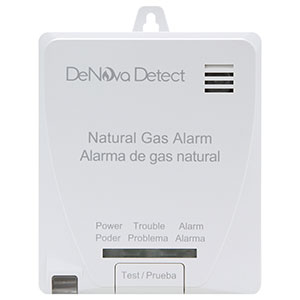
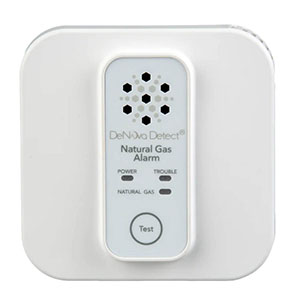
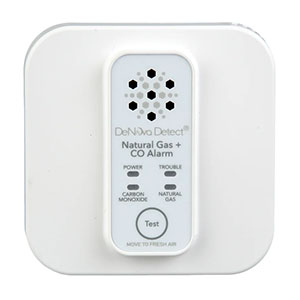
Standard smoke alarms and carbon monoxide detectors cannot detect natural gas. To meet modern safety expectations, a dedicated natural gas alarm should be installed in every room containing a natural gas burning appliance.
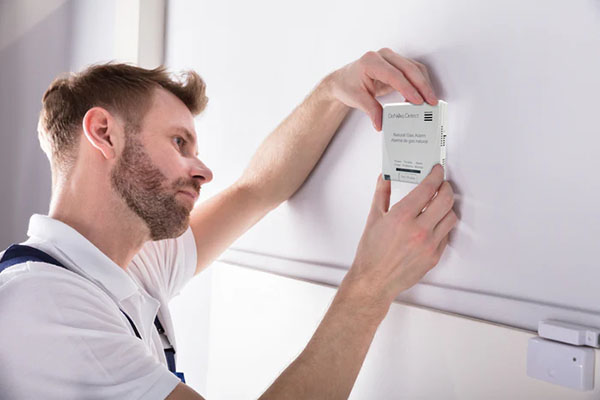
For effective early detection, alarms must be mounted high on the wall, within 12 inches of the ceiling, where rising methane accumulates first.
Battery-powered natural gas alarms with sealed 10-year batteries are especially well suited for rental properties and managed buildings. These devices allow for proper high-wall placement without requiring hardwiring or electrical outlets.
Using long-life, sealed batteries eliminates the need for tenants to replace batteries, reduces maintenance calls, and helps ensure the alarm remains operational for its entire service life.
Property managers often choose natural gas alarms from DeNova Detect because they simplify installation, reduce ongoing maintenance, and support compliance efforts.
Beyond basic installation, the type of sensor technology used in a natural gas alarm can significantly impact tenant safety. Advanced MEMS (Micro-Electro-Mechanical Systems) sensors are designed to detect methane more quickly and accurately than traditional technologies.
DeNova Detect natural gas detectors are calibrated to trigger alerts at just 10% of the Lower Explosive Limit (LEL), providing up to an 11-minute earlier warning compared to older sensors. In high-density housing, this additional time can be critical for safe evacuation.
In an emergency, confusion can delay evacuation. Natural gas alarms with loud audible alerts and clear voice instructions help tenants understand the severity of the situation and what actions to take.
Bilingual voice alerts further improve safety in diverse communities by ensuring instructions are understood quickly during a natural gas leak emergency.
Safety standards such as NFPA 715 increasingly influence building codes and local regulations. Installing compliant natural gas alarms demonstrates due diligence and helps reduce legal exposure in the event of an incident.
For landlords and property managers, investing in methane gas detection is not only about compliance - it is about protecting residents, preserving property, and minimizing liability.
Natural gas safety should be a core component of any rental property safety plan. Dedicated natural gas alarms, proper placement, advanced detection technology, and low-maintenance designs all contribute to safer buildings and more confident property management.
By installing reliable natural gas detectors and following modern safety guidance, landlords and property managers can provide safer living environments while meeting evolving regulatory and tenant expectations.
Explore related support articles and resources for this topic.
Learn how to choose the best natural gas alarm for your home. Compare detector types, placement, sensor technology, and key safety features.
Contact options may differ depending on the type of help you need.