
Guide to Natural Gas Alarm Safety
Learn how natural gas detectors work, where to install them, and how to protect your home from methane leaks with fast, reliable gas alarm safety guidance.
Related Topics:
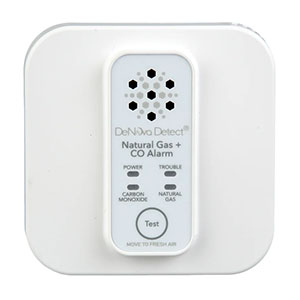
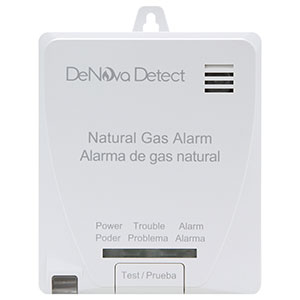
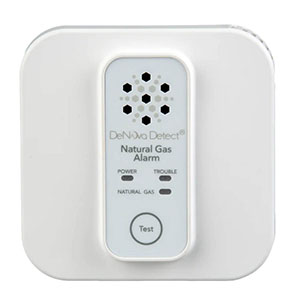
Implementing a proactive safety strategy with a high-quality natural gas alarm is the most effective way to protect your home from the explosive risks of methane leaks. Because natural gas is lighter than air and rises quickly toward the ceiling, installing a dedicated natural gas detector for home use ensures that silent leaks are identified long before they reach a dangerous concentration.
By choosing an advanced natural gas leak detector equipped with MEMS technology, you benefit from significantly faster alerts and a reduction in false alarms compared to traditional sensors. Whether you are looking to buy natural gas alarms for the first time or upgrading your current system, a reliable home natural gas detector provides the critical early warning and bilingual voice instructions necessary to evacuate safely and call 9-1-1 during an emergency.
Our alarms trigger at 10% LEL, providing an alert up to 11 minutes faster than traditional detectors that wait for 25% LEL.
Advanced MEMS sensor technology virtually eliminates false alarms caused by common household sprays, cleaners, or cooking vapors.
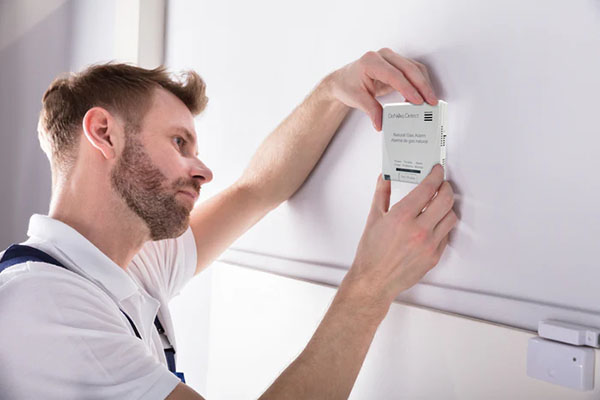
Follow the 12-Inch Rule: Methane rises rapidly, so alarms must be installed within 12 inches of the ceiling for life-saving early detection.
To stay safe, you need a dedicated natural gas alarm specifically designed to detect methane, as standard smoke and carbon monoxide detectors cannot sense it. For the best protection, DeNova Detect Store offers models that utilize a 10% LEL threshold, providing a much faster warning than traditional sensors.
Ensure your natural gas detector for home use is installed high on the wall near the ceiling, as this allows the natural gas leak detector to catch rising gas before it reaches an explosive concentration.
It is vital to understand that a carbon monoxide (CO) detector and a natural gas alarm serve two entirely different safety functions. A CO detector monitors for a toxic byproduct of incomplete combustion-an odorless, colorless gas that can be lethal if inhaled-and is typically installed at eye level or near sleeping areas where it can best protect occupants.
In contrast, a natural gas leak detector is designed to sense unburned methane, which is a highly explosive fire hazard that rises rapidly toward the ceiling. Because standard CO detectors cannot detect methane, and a dedicated natural gas detector for home use is specifically calibrated to catch leaks high on the wall, using a specialized device like a DeNova Detect home natural gas detector is the only way to ensure 24/7 protection against both poisoning and potential explosions.
While many homeowners assume a single device can handle all threats, it is essential to recognize that a carbon monoxide detector and a natural gas alarm are designed to detect completely different hazards. A natural gas leak detector monitors for unburned methane, a highly explosive gas that rises rapidly toward the ceiling and requires a specialized sensor to trigger a life-saving warning.
Standard CO detectors cannot detect methane. Using a specialized device like a DeNova Detect home natural gas detector is the only way to ensure your family is fully protected from both toxic poisoning and potential gas explosions.
| Feature | Natural Gas Alarm | Carbon Monoxide Alarm |
|---|---|---|
| Hazard Detected | Explosive Methane (Unburned Fuel) | Toxic CO Gas (Combustion Byproduct) |
| Gas Behavior | Lighter than air; rises rapidly to the ceiling. | Similar to air; disperses evenly through the home. |
| Mounting Height | HIGH: Within 12 inches of the ceiling. | LOW: Eye-level or near sleeping areas. |
| Safety Risk | Fire and Explosion hazards. | Poisoning and Asphyxiation hazards. |
Note: Because these gases behave differently, a standard CO alarm cannot detect a natural gas leak.
No, a standard carbon monoxide alarm does not detect natural gas. These are two chemically different gases that require entirely different sensors. To ensure comprehensive protection, you can install a DeNova Detect Natural Gas & Carbon Monoxide Alarm.
This 2-in-1 detector provides the specialized technology needed to monitor both hazards in a single device.
A natural gas alarm detects leaks by identifying the physical or chemical presence of methane molecules in the air. Traditional detectors use catalytic bead sensors that burn a tiny amount of gas to measure a change in resistance.
Modern devices like the DeNova Detect natural gas detector utilize advanced MEMS (Micro-Electro-Mechanical Systems) technology. This specialized natural gas leak detector works by pulling methane molecules onto a precision-engineered silicon chip, triggering a rapid electrical signal even at very low concentrations.
Because this home natural gas detector can alert you at just 10% LEL, it catches rising gas near the ceiling much faster than older, less efficient sensors.
Yes, you should have a natural gas alarm in your home if you use any gas-fueled appliances such as a stove, furnace, water heater, or fireplace. While you may rely on the "rotten egg" odor added to gas, that smell can fade or be impossible to detect while you are sleeping.
A dedicated natural gas detector for home safety provides 24/7 monitoring to alert you before gas reaches an explosive level. Safety standards are rapidly evolving. For example, the Illinois Fuel Gas Alarm Act now requires many residential buildings to have these devices. DeNova Detect Store offers advanced sensors that catch leaks up to 11 minutes faster than traditional models.
Explore related support articles and resources for this topic.
Learn how natural gas detectors work, where to install them, and how to protect your home from methane leaks with fast, reliable gas alarm safety guidance.
Contact options may differ depending on the type of help you need.