
Guide to Natural Gas Alarm Safety
Learn how natural gas detectors work, where to install them, and how to protect your home from methane leaks with fast, reliable gas alarm safety guidance.
Related Topics:
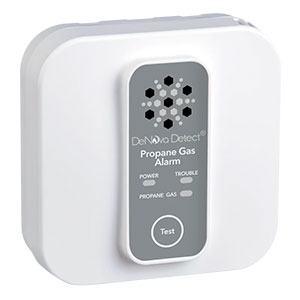
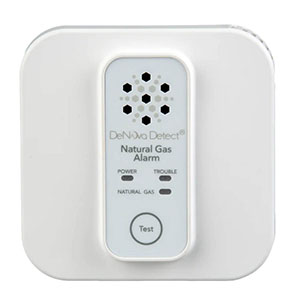
Propane gas alarms play an important role in helping detect leaks and improving overall safety in homes, RVs, cabins, and other propane-powered spaces. Below are answers to some of the most common questions about propane gas detectors, how they work, and when you may need one.
Propane (LP gas) is heavier than air, so it sinks and pools along the floor during a leak. Mounting the DeNova Detect Propane Alarm on an interior wall completely within 18 inches of the floor lets the sensor catch escaping fuel right away, keeping your home compliant with NFPA 715 safety standards.
Install a propane gas alarm in every room that contains a propane-burning appliance, such as a furnace, water heater, kitchen range, stove, indoor space heater, fireplace, or backup generator line. For multi-level homes, rental units, vacation cabins, and RVs, mount additional propane detectors along low hallway walls near sleeping areas so audible alerts wake occupants at night.
Install your propane detector in the same room as the appliance, placed between 3 and 10 feet horizontally from the gas-burning equipment. This placement ensures the sensor captures pooling gas vapors promptly without being exposed to direct heat, burner drafts, or kitchen grease.
Unlike natural gas, propane sinks and spreads across the floor. For dependable leak detection:
Avoid dead-air spaces like tight wall corners, spaces directly behind large furniture, and areas next to forced-air heating registers, exterior doors, or drafty windows that could divert gas away from the sensor. Do not install the unit outdoors, in steamy bathrooms, or inside unventilated cabinets.
Yes. If your propane furnace, water heater, or fuel lines are located on lower levels, installing a low-wall propane detector is essential. Because propane gas settles downward, any leak originating upstairs or in the mechanical room will naturally collect in the lowest points of the foundation.
Safety standards recommend installing at least one propane alarm in every room that contains a propane-burning appliance. For comprehensive whole-home protection, add detectors along low hallway walls outside primary sleeping areas and in finished basements where gas can migrate and accumulate.
The DeNova Detect Propane Alarm operates on an included 3V lithium battery that powers the unit continuously for 5 full years. As America’s first and only 5-year battery-powered propane gas alarm, it requires no replacement batteries or electrical outlets, making cordless baseboard installation effortless.
No routine battery changes are required. The sealed 3V lithium power supply is engineered to last the entire 5-year operational service life of the device. When the detector alerts that its service life has expired, replace the entire alarm unit.
The Lower Explosive Limit (LEL) is the minimum concentration of gas in the air capable of igniting. While conventional propane alarms wait to alert until reaching 25% LEL, the DeNova Detect Propane Alarm activates at an ultra-sensitive 10% LEL, warning you and your family up to 11 minutes faster.
No. Traditional catalytic sensors frequently trigger nuisance alarms when exposed to aerosol sprays, perfumes, alcohol vapors, and cleaning products. The MEMS hot-wire semiconductor sensor in the DeNova Detect Propane Detector is calibrated specifically for propane molecules, virtually eliminating false alarms from everyday household chemicals.
Yes. Because the alarm is 100% battery-powered by an internal long-life 3V lithium cell, it provides uninterrupted protection during severe weather, electrical grid failures, and storms when standby generators and auxiliary propane heaters are most active.
Leave the building immediately on foot. Do not flip light switches, use phones inside, unplug appliances, or light matches, as small electrical arcs can ignite concentrated gas vapors. Once safely outside, call 9-1-1 and your local propane supplier.
Test the unit monthly by pressing the Test button on the front cover. The alarm runs self-diagnostics, illuminates its LEDs, and plays bilingual voice prompts in English and Spanish to confirm proper operation. Automated self-test diagnostics also monitor internal systems 24/7 in the background.
You can silence nuisance signals like low battery or trouble chortles using the Test/Silence button, but an active emergency gas leak alarm will continue to sound until the concentration of propane in the room clears below dangerous levels.
To conserve lithium battery power over its 5-year operating lifespan, the Power LED stays off during normal monitoring. It blinks for 30 seconds upon initial setup and illuminates whenever the manual Test button is pressed.
The DeNova Detect Propane Alarm is ETL Listed (Intertek 5029001) conforming to UL STD 1484, and its sensor is listed to UL STD 2075. The unit satisfies NFPA 715 installation recommendations for fuel gas detection equipment across residential homes, multi-family properties, and rental spaces.
The detector operates reliably in temperatures from 32°F to 122°F (0°C to 50°C) and handles relative humidity levels between 5% and 95% non-condensing. This broad environmental range makes it well-suited for primary homes, seasonal cabins, detached workshops, and RVs.
Keep the detector clear of dust and cobwebs by gently wiping the exterior faceplate with a clean, dry microfiber cloth or using a soft brush vacuum attachment around the sensor vents. Never spray cleaning chemicals, solvents, or air fresheners directly onto or near the unit, as chemical buildup can damage the MEMS sensor.
Propane's added odor (ethyl mercaptan) can fade in metal pipes, go unnoticed while you sleep, or be hidden by cooking aromas and air fresheners. A dedicated electronic propane gas detector runs continuously, providing 24/7 protection long before gas reaches dangerous, combustible levels.
Browse support topics by category to find product help, setup guides, troubleshooting tips, and frequently asked questions.
Learn how natural gas detectors work, where to install them, and how to protect your home from methane leaks with fast, reliable gas alarm safety guidance.
Learn how to choose the best natural gas alarm for your home. Compare detector types, placement, sensor technology, and key safety features.
This guide provides a comprehensive overview of the latest residential safety mandates regarding natural gas detection and building compliance.
Find answers to common questions about DeNova Detect natural gas alarms, including installation, operation, battery life, and natural gas safety.
Learn what propane gas is, why propane leaks are dangerous, how propane gas alarms work, and where propane is commonly used in homes, RVs, grills, and heaters.
Get answers to common propane gas alarm questions including leak detection, placement, lifespan, and whether you need a propane detector in your home or RV.
Contact options may differ depending on the type of help you need.