
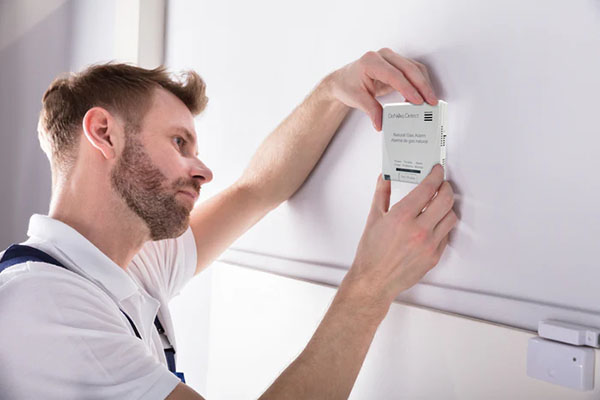
Natural Gas Alarm Buying Guide
Learn how to choose the best natural gas alarm for your home. Compare detector types, placement, sensor technology, and key safety features.
Related Topics:
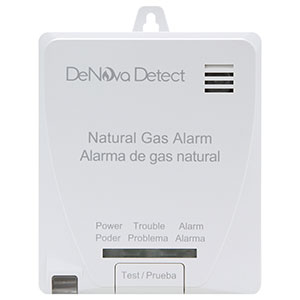
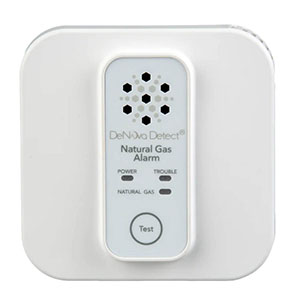
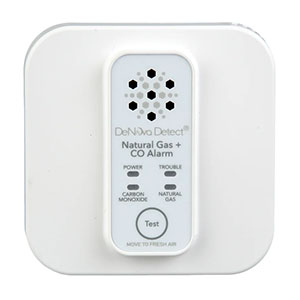
Keeping your home safe from natural gas hazards requires a proactive “detect and prevent” strategy. Since natural gas (methane) is highly flammable and rises rapidly toward the ceiling, early detection and proper placement of safety equipment are critical to preventing fires, explosions, and life-threatening emergencies.
Natural gas is widely used for cooking, heating, and hot water, but even a small leak can become dangerous if it goes undetected. Methane is lighter than air, meaning it quickly accumulates near the ceiling where it can reach an explosive concentration before occupants notice a problem.
Standard smoke alarms and carbon monoxide detectors are not designed to detect methane. A dedicated natural gas alarm is the only way to continuously monitor for natural gas leaks in the home.
A comprehensive home natural gas safety plan should focus on three core areas: advanced detection, strategic placement, and preventative maintenance.
Relying on the “rotten egg” odor added to natural gas is not enough. Odor fade can occur, and leaks that happen while you are sleeping may go completely unnoticed.
Installing a high-quality natural gas alarm provides continuous, 24/7 monitoring. Advanced detectors, such as those from DeNova Detect, are designed to trigger at just 10% of the Lower Explosive Limit (LEL), providing up to an 11-minute earlier warning compared to traditional sensors.
Since natural gas is lighter than air, proper placement is just as important as the detector itself. A home natural gas detector should be mounted high on the wall, within 12 inches of the ceiling, where rising natural gas will accumulate first.
Detectors should be installed near natural gas-burning appliances such as:
Correct placement helps ensure leaks are detected as early as possible, before natural gas spreads throughout the room.
Detection alone is not enough. Preventative maintenance plays a key role in methane gas safety. Have a licensed professional inspect your natural gas lines, appliance connections, and pilot lights at least once a year.
Regular inspections help identify worn fittings, corrosion, or appliance issues before they lead to leaks.
If your natural gas alarm activates, act immediately. Evacuate everyone from the home, avoid turning lights on or off, and do not use phones or electronics inside the house. Even a small spark can ignite accumulated natural gas.
Once you are safely outside, call emergency services or your gas utility provider and follow their instructions.
Natural gas safety in the home depends on early detection, correct alarm placement, and ongoing maintenance. A dedicated natural gas alarm provides protection that smoke and carbon monoxide detectors alone cannot offer.
By combining advanced detection technology with proper installation and routine inspections, homeowners can significantly reduce the risk of natural gas leaks and protect their families with confidence.
Explore related support articles and resources for this topic.
Learn how to choose the best natural gas alarm for your home. Compare detector types, placement, sensor technology, and key safety features.
Contact options may differ depending on the type of help you need.