

Guide to Natural Gas Alarm Safety
Learn how natural gas detectors work, where to install them, and how to protect your home from methane leaks with fast, reliable gas alarm safety guidance.
Related Topics:
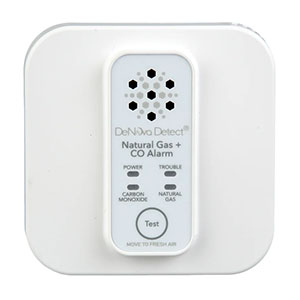
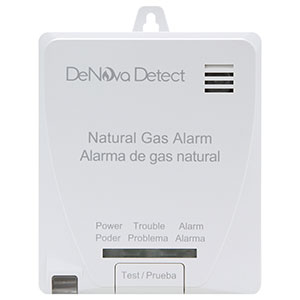
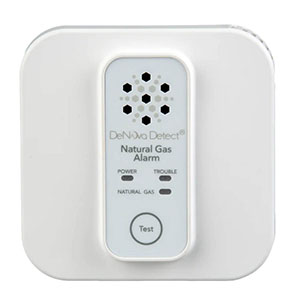
Natural gas is a cornerstone of modern home comfort, yet its primary component, methane presents a dual threat of high-velocity combustion and rapid oxygen displacement. The true danger lies in the 'pre-explosive' phase, where gas concentrations are rising but haven't yet reached the Lower Explosive Limit (LEL). Relying on smell or outdated sensors often leaves homeowners with zero margin for error. Understanding the physics of how methane pockets at the ceiling is the first step in moving from reactive fear to proactive safety.
Methane, the main component of natural gas, is lighter than air and rises quickly toward the ceiling. As it accumulates, it can enter an explosive range and be ignited by something as simple as a light switch, appliance, or static electricity.
Although utility companies add a “rotten egg” odor to help identify leaks, this smell is not always reliable. Odor can fade, be masked by other household smells, or go unnoticed while you are sleeping. Due to this, a natural gas alarm is an essential life-safety device. Using a natural gas detector for home protection is the only way to ensure continuous, 24/7 monitoring.
Advanced detectors, such as those from DeNova Detect, are designed to alert you at just 10% of the Lower Explosive Limit (LEL), providing critical extra minutes to evacuate before a leak becomes deadly.
In most homes, natural gas is delivered through an underground utility line that connects to a natural gas meter and is distributed throughout the house via a network of pipes. While natural gas provides efficient energy for heating and cooking, the infrastructure that delivers it can develop leaks over time.
Any point in the system from a loose fitting to a malfunctioning appliance can become a source of a leak, which is why a natural gas alarm is an essential safety device in every household.
Common sources of natural gas in the home include:
Since these sources are spread throughout the home, placing a natural gas leak detector near major appliances and high on the wall is the best way to ensure early detection.
While most people rely on their sense of smell to identify a natural gas leak, it is a dangerously fallible line of defense. Utility companies inject natural gas with mercaptan to create a distinct sulfur or "rotten egg" scent, but this warning signal is susceptible to a phenomenon known as Odor Fade.
Through a process of adsorption, the chemical odor can be stripped away by reactive surfaces such as new iron piping, masonry, or even damp drywall, allowing the colorless methane to accumulate without its signature scent. If a leak originates underground, the surrounding soil can act as a natural filter, scrubbing the mercaptan from the gas before it ever enters your home.
Unlike carbon monoxide, which mixes relatively evenly with air, natural gas is nearly 50% lighter than oxygen. In a leak scenario, methane doesn't just fill a room; it stratifies. It rushes to the highest point in the room, forming a concentrated "lake" of explosive gas at the ceiling that can be ignited by a ceiling fan or recessed light long before a person at floor level smells a thing. This stratification creates a high-concentration 'combustion zone' at the ceiling, meaning a leak can reach the 5%-15% explosive volume threshold in the upper third of a room while the air at the floor remains breathable and odorless.
This is why sensor placement isn't just a suggestion. It's a requirement of the physics of the gas itself.
Natural Gas leaks can cause both physical symptoms and visible environmental warning signs. If you suspect a leak, leave the area immediately and contact emergency services.
When natural gas displaces oxygen in the home, occupants or pets may experience:
For homeowners seeking the highest level of protection, advanced natural gas alarms that use modern sensor technology offer significant advantages over traditional models.
DeNova Detect natural gas detectors use specialized MEMS (Micro-Electro-Mechanical Systems) sensors and a rapid 10% LEL response threshold to alert residents up to 11 minutes faster than older technologies. Since these alarms are battery powered with a sealed 10-year battery, they can be installed high on the wall near the ceiling, where methane accumulates first.
With bilingual voice alerts and professional-grade reliability, a high-quality natural gas detector provides the early warning needed to evacuate safely and prevent catastrophic outcomes.
While many residential detectors wait until gas reaches 25% LEL to trigger, DeNova Detect utilizes MEMS technology to alert you at 10% LEL. Those extra minutes of early warning are the critical window needed to shut off the main valve and evacuate safely.
Installing a dedicated natural gas alarm provides continuous monitoring. It is one of the most effective steps you can take to protect your home, your family, and your peace of mind.
Explore related support articles and resources for this topic.
Learn how natural gas detectors work, where to install them, and how to protect your home from methane leaks with fast, reliable gas alarm safety guidance.
Contact options may differ depending on the type of help you need.