
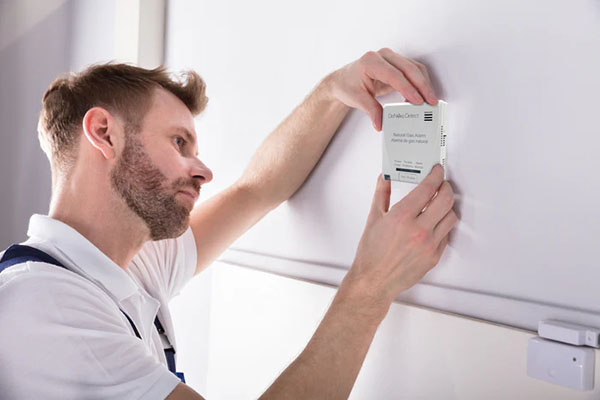
Customer Reviews For The DeNova Detect 10-Year Battery-Powered Carbon Monoxide + Natural Gas Alarm

Overall Rating
Product Reviews
We have natural gas appliances in our home, and I wanted something that would give us an extra layer of protection. I already had smoke alarms and carbon monoxide alarms on my main floor, but nothing in my downstairs utility room. I liked that this DeNova Detect alarm was designed to detect both natural gas and carbon monoxide in one device. It was extremely easy to install and setup!
Easy and simple to install. Ten years battery life. Very compact and blend with interior house. Detects Carbon Monoxide and Natural Gas Alarm at lowers levels than others in the market. The price is very reasonable compare with other brands. I recommend this detector to anyone.
Product FAQs
The natural gas and carbon monoxide alarm should be replaced when the End-of-Service-Life (or EOL) Alert activates on your device. When this happens, the Trouble (Yellow) LED on the device will begin to blink twice every 10 seconds, and the audible alert will beep twice and say "Please replace detector" once every minute. This will occur approximately 10 years after device installation.
- Open the battery cover on the back of the detector.
- This cover slides out of place. To open, place both thumbs on the back of the battery cover where the battery cover hooks snap into place.
- Push down where the battery cover snaps into place with your thumbs and slide the cover out. Some force is required.
- Connect the included lithium battery by inserting the battery harness connector into the product.
- Do NOT remove the plastic wrap surrounding the battery pack.
- The battery connector has a large notch on it that faces up when installed correctly. There is only one way in which the connector can be installed. A small portion of the connector will be exposed when connected properly. You should hear it click into place.
- After connecting the battery, place the battery with the labels facing down and the battery wires wrapping around the top side of the battery pack. For the best fit, it is recommended to have the negative (-) terminals face toward the outer edge of the detector.
If at any time your natural gas detector's alarm sounds or if you ever smell or hear a natural gas leak:
- Evacuate immediately and take others with you.
- Do not use a phone; light a match; turn on or off lights, flashlights, or appliances; start a car; or do anything else that could create a spark or flame and cause the gas to ignite or explode.
- Call 911 once you are safely outside the premises. You can report leaks anonymously.
- Do not re-enter the premises until told to do so by authorities.
In the event of a gas leak, you may smell natural gas before the natural gas detector's alarm is activated. Whether or not the unit's alarm is sounding, if you smell gas, act fast. Report the leak once you are safely outside.
- Smell - A distinctive, strong odor similar to rotten eggs
- See - A white cloud, mist, fog, bubbles in standing water, blowing dust, or vegetation that appears to be dead or dying for no reason
- Hear - Roaring, hissing, or whistling
Yes. Since the combination alarm is powered by an internal battery, the natural gas and carbon monoxide detector should continue to function during a power outage.
No, the natural gas detector will only detect the presence of natural gas and carbon monoxide (CO) in the area where the unit is installed. It will not detect fire, heat, smoke or the presence of any other gases.
No, the natural gas detector will only monitor the air in the area where the unit is installed. Natural gas leaks could be present in other areas and/or on other floors of your home or building without reaching the natural gas detector. As such, the unit's alarm may not sound in the event of a natural gas leak in a remote part of your home or building. Doors or the obstructions may also affect the rate at which natural gas reaches the natural gas detector. You should install separate methane gas detectors as needed in other areas of your home where natural gas appliances are used.
No, the natural gas detector's alarm may not be heard in all rooms or situations. Since the natural gas detector is installed in a limited area of your home or building - such as the kitchen, for example - people sleeping or awake in other rooms or on other floors may not hear the unit's alarm in the event of a natural gas leak. People may not hear the alarm if the sound is at a distance and/or blocked by closed doors and/or other obstructions. Noise from traffic, stereos, radios, televisions, air conditioners, appliances, or other sources may also prevent people from hearing the unit. The unit's alarm is not intended for people who are hearing impaired.
Yes, the DD623NCV meets the residential standards established under Illinois HB 3652 for fuel gas detection equipment.
Yes. NYC Local Law 157 requires natural gas detectors in residential units to be installed near the ceiling and meet UL 1484 standards. The battery-operated DD620NV satisfies all NFPA 715 placement and UL 1484 requirements.
DD623NCV Video Guide
Watch this helpful video to learn more about the DeNova Detect 10-Year Battery Carbon Monoxide + Natural Gas Alarm - DD623NCV.
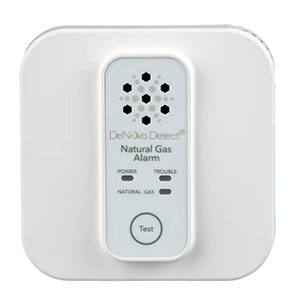
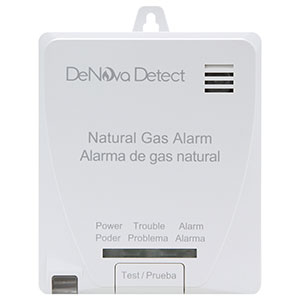
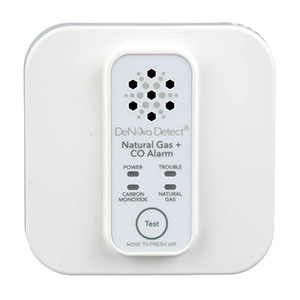
Read customer ratings and reviews for the DeNova Detect 10-Year Battery Carbon Monoxide + Natural Gas Alarm - DD623NCV. Learn what other customers have to say about their experiences, including what they liked, how the DeNova Detect 10-Year Battery-Powered Carbon Monoxide + Natural Gas Alarm met their expectations, and any concerns they encountered. These firsthand perspectives can provide helpful information beyond the standard product description.
Browse the reviews to compare customer ratings, explore positive and critical feedback, and make a more informed purchasing decision. If you've purchased or used this product, we encourage you to share your experience and help other shoppers find the right product for their needs.