

Natural Gas Alarm Buying Guide
Learn how to choose the best natural gas alarm for your home. Compare detector types, placement, sensor technology, and key safety features.
Related Topics:
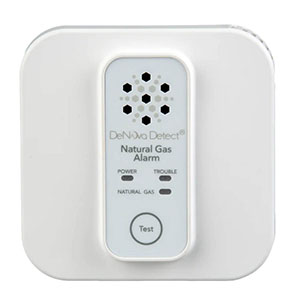
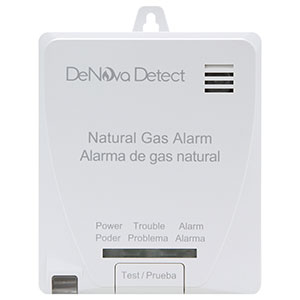
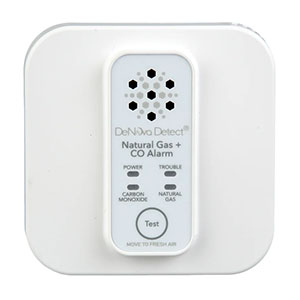
While hardwired systems are a staple in new construction, the unique properties of natural gas makes battery operated detectors the superior choice for existing residential retrofits. Since natural gas is significantly lighter than air, it 'pockets' at the ceiling. Battery power removes the electrical tethers that often force detectors too low to be effective
Natural gas is lighter than air and rises quickly toward the ceiling. For early detection, a natural gas detector for home safety must be mounted high on the wall, typically within 12 inches of the ceiling. This placement allows the alarm to detect rising methane before it reaches an explosive concentration.
Hardwired and plug-in alarms are often limited by outlet locations or wiring constraints, which typically place them much lower on the wall. This can delay detection and reduce the amount of time occupants have to respond safely.
Traditional natural gas sensors required constant high-voltage "heating" to detect gas, making hardwired connections almost mandatory. However, the shift to 10% LEL (Lower Explosive Limit) detection standards in legislation like NYC Local Law 157 has favored the new generation of battery-powered MEMS sensors. These sensors don't just save on electricity; they offer a faster response time by being positioned exactly where the gas accumulates first.
Modern battery-powered natural gas alarms use sealed lithium batteries designed to last for the entire life of the sensor, typically up to 10 years. This “set it and forget it” design eliminates annual battery replacements and the disruptive low-battery chirps that are common with plug-in backup batteries.
In contrast, hardwired units may still require backup batteries and periodic maintenance to ensure continued operation.
While a high-quality battery-powered natural gas alarm may have a slightly higher upfront cost, it is often more cost-effective over time. Hardwired installations frequently require hiring an electrician, which can cost $150–$250 or more, in addition to the cost of the alarm itself.
Battery-powered alarms avoid installation fees altogether and do not add to your electricity usage.
Advanced battery-powered alarms, such as those offered by DeNova Detect, combine optimal placement with modern MEMS (Micro-Electro-Mechanical Systems) sensor technology. These sensors are highly sensitive and can trigger alerts at just 10% of the Lower Explosive Limit (LEL).
By detecting natural gas earlier, these alarms can provide up to an 11-minute head start for evacuation compared to traditional sensors that alarm at higher natural gas concentrations.
Hardwired natural gas alarms may be suitable in new construction or commercial environments where wiring is already in place and installation is mandated by building specifications. However, for most existing homes, retrofits, apartments, and rental properties, battery-powered alarms offer greater flexibility and protection.
Explore related support articles and resources for this topic.
Learn how to choose the best natural gas alarm for your home. Compare detector types, placement, sensor technology, and key safety features.
Contact options may differ depending on the type of help you need.