
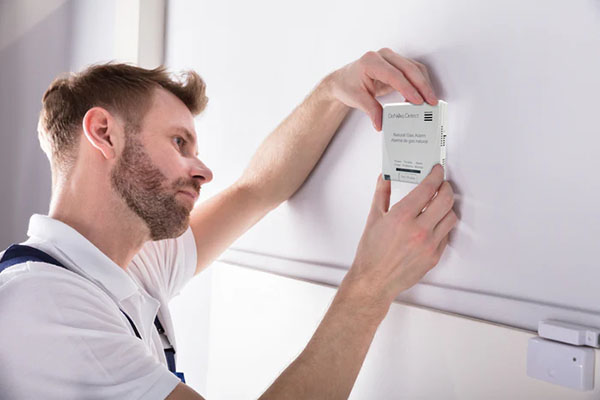
Guide to Propane Gas Alarm Safety
Learn what propane gas is, why propane leaks are dangerous, how propane gas alarms work, and where propane is commonly used in homes, RVs, grills, and heaters.
Related Topics:
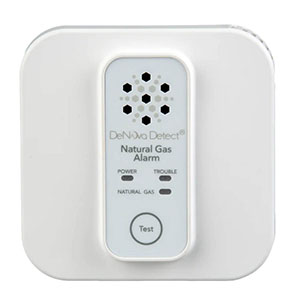
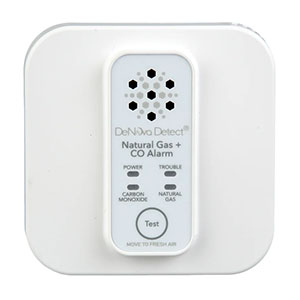
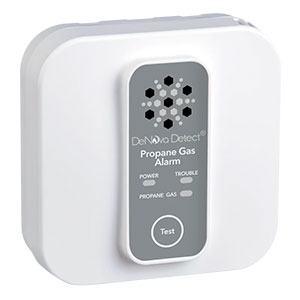
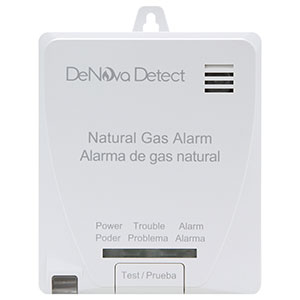
Protecting your property from liquid petroleum (LP) gas leaks starts with choosing the right detector. Propane is denser than air, causing escaping gas to sink and pool along floors, baseboards, and low cavities. This creates an invisible explosion risk long before occupants notice an odor.
Modern MEMS (Micro-Electro-Mechanical Systems) technology provides faster, more dependable protection than traditional sensors. Calibrated to alert at just 10% LEL while resisting false triggers from common household sprays, next-generation alarms provide up to 11 extra minutes of evacuation time. The cordless DeNova Detect DD720PV complies with NFPA 715 installation standards and features clear bilingual voice alerts in English and Spanish to guide you during an emergency.
Triggers at an ultra-sensitive 10% LEL threshold to provide critical alerts up to 11 minutes faster than traditional 25% LEL alarms.
Advanced MEMS hot-wire sensors isolate propane molecules, preventing nuisance alarms from hairspray, cleaning chemicals, and aerosols.
Powered by an included 5-year lithium battery, allowing easy installation within 18 inches of the floor without requiring an AC outlet.
Propane and natural gas pose serious explosion hazards, but their physical weights dictate completely different alarm placement. Natural gas consists mostly of methane, a lighter-than-air gas that rises straight to the ceiling. Propane is heavier than air and sinks directly to the floor.
These opposing physical properties mean a ceiling-mounted natural gas alarm cannot detect a low-lying propane leak. Proper home safety requires installing dedicated alarms tailored to the specific gas and mounting height.
| Feature | Propane Gas Alarm (DD720PV) | Natural Gas Alarm (DD620NV) |
|---|---|---|
| Gas Detected | Propane (LP Gas) | Methane (Natural Gas) |
| Gas Behavior | Heavier than air; sinks and settles along floors | Lighter than air; rises rapidly toward ceilings |
| Mounting Location | LOW: Completely within 18 inches of the floor | HIGH: Within 12 inches of the ceiling |
| Standard Guidance | NFPA 715 Propane Standards | NFPA 715 Methane Standards |
Traditional propane alarms use catalytic sensors that consume high electrical power, tethering installation to available wall outlets. These older units commonly experience nuisance alarms triggered by cleaning chemicals, deodorants, or cooking fumes, and often do not sound until reaching 25% LEL.
The DeNova Detect DD720PV utilizes a MEMS hot-wire semiconductor sensor requiring only microwatts of power. This breakthrough enables 5 years of continuous battery-powered operation without replacement batteries or electrical wiring, giving you the flexibility to mount the unit exactly where safety standards dictate.
Propane powers essential appliances in millions of homes, especially in areas without access to municipal gas lines. In primary residences, common risk areas include kitchens, utility rooms, and basements where propane furnaces, water heaters, ranges, fireplaces, and backup generators operate. Mechanical closets and enclosed spaces around shutoff valves, intake lines, and indoor regulators are especially prone to slow leaks that pool quietly near the floor.
Recreational and secondary spaces also require dependable oversight. Detached workshops, storage garages, seasonal cabins, and RVs frequently rely on propane for localized space heating or cooking. These spaces often sit unoccupied for long periods, allowing unnoticed seepage to accumulate into an explosive hazard before anyone steps inside. Installing a dedicated low-wall monitor ensures continuous protection across every structure on your property.
A layered safety plan combines proper detector placement with consistent appliance maintenance. Mount your alarm low on the wall, completely within 18 inches of the floor in an unobstructed area to follow NFPA 715 standards. Never rely solely on the artificial "rotten egg" smell of propane, as that scent can fade in metal pipes, go unnoticed while you sleep, or blend into household odors. Schedule an annual professional inspection for all fuel lines, valves, and burner connections to stop wear and tear before it becomes hazardous.
If an alarm activates, react immediately. Leave the building right away without flipping light switches, using landlines, or unplugging electronics, as small electrical sparks can ignite concentrated gas vapors. Once you are a safe distance outdoors, call 9-1-1 and your propane supplier to report the leak. To keep your protection dependable year after year, replace the complete alarm unit at the end of its 5-year service life.
Explore related support articles and resources for this topic.
Learn what propane gas is, why propane leaks are dangerous, how propane gas alarms work, and where propane is commonly used in homes, RVs, grills, and heaters.
Contact options may differ depending on the type of help you need.