
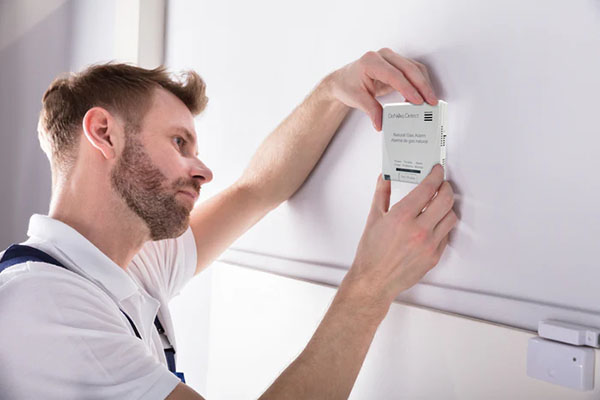
Guide to Natural Gas Alarm Safety
Learn how natural gas detectors work, where to install them, and how to protect your home from methane leaks with fast, reliable gas alarm safety guidance.
Related Topics:
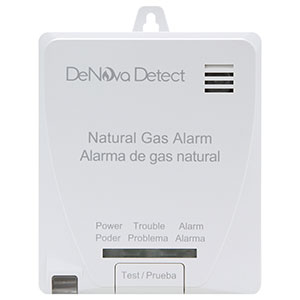
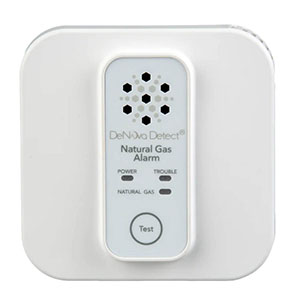
No. A standard carbon monoxide (CO) alarm does not detect natural gas. These are two chemically different hazards that require entirely different sensors, so you need the right device for each type of threat.
Carbon monoxide is a toxic byproduct created by incomplete combustion, such as from a malfunctioning furnace, fireplace, or natural gas appliance. CO alarms are designed with electrochemical sensors that react specifically to carbon monoxide molecules and measure exposure over time.
Natural gas is primarily methane, a highly flammable fuel that can create an explosion risk if it accumulates in the air. Methane requires a different sensor technology altogether, so standard CO detectors are not capable of sensing a natural gas leak.
Since the risks are different, the best home safety approach is to have protection for both hazards, especially in homes with natural gas appliances.
Yes. If your home uses natural gas appliances such as a stove, furnace, boiler, water heater, or fireplace, a dedicated natural gas alarm provides protection that CO alarms cannot. While natural gas companies add an odorant (mercaptan) to help you smell leaks, that odor can be missed, fade over time, or be impossible to detect while you are asleep.
A natural gas detector is designed to alert you early, before natural gas reaches an explosive concentration, giving you time to evacuate safely and call emergency services.
Since these gases behave differently in the air, placement is not the same.
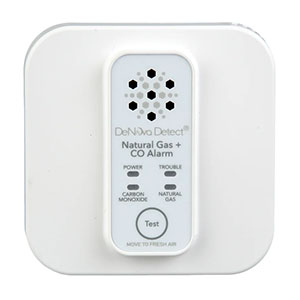
To ensure complete protection, you can install separate alarms or use a combination unit designed to detect both hazards. The DeNova Detect Natural Gas & Carbon Monoxide Alarm is a 2-in-1 detector that provides the specialized technology required to monitor both methane (natural gas) and carbon monoxide in a single device.
A carbon monoxide alarm does not detect natural gas. For full home safety, use CO alarms and a dedicated natural gas alarm (or a properly designed combination unit).
Explore related support articles and resources for this topic.
Learn how natural gas detectors work, where to install them, and how to protect your home from methane leaks with fast, reliable gas alarm safety guidance.
Contact options may differ depending on the type of help you need.