

Battery Operated Propane Alarm Guide: Placement Height, NFPA 715 and Setup
Learn why low wall placement matters for liquid propane, how the cordless 5 year battery DD720PV provides early leak warnings at 10% LEL, and how to meet NFPA 715 safety standards without running wires.
Cordless Protection: Why a Battery Powered Propane Alarm Matters
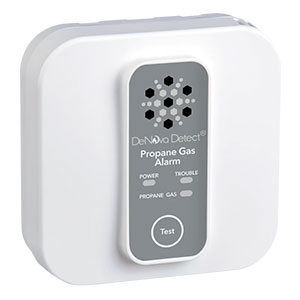
Liquid propane (LP gas) powers critical appliances across residential homes, off grid cabins, workshops, and recreational vehicles. However, standard gas alarms historically required hardwiring into a 120V AC circuit or a 12V DC vehicle battery. The DeNova Detect DD720PV Propane Gas Alarm eliminates installation barriers as the industry standard 5 year battery operated propane alarm.
Powered by a sealed lithium battery pack and advanced micro electromechanical systems (MEMS) sensor technology, the unit operates entirely cordless. Without the need for a wall outlet, you can place the detector where sinking propane actually pools, not just where a plug is available.
Cordless 5 Year Battery
Sealed lithium battery provides continuous, maintenance free detection for 5 full years without battery swaps or power cords.
10% LEL Early Warning
Triggers an alert at just 10% Lower Explosive Limit up to 11 minutes faster than legacy sensors operating at 25% LEL.
MEMS Sensor Precision
Advanced sensor technology prevents false alarms from cooking fumes, hairspray, and household humidity.
Voice and 85 dB Alarm
Features an 85 dB audible siren paired with clear bilingual spoken voice commands that announce "Danger: Propane Gas Leak."
Propane vs. Natural Gas: Why Mounting Height Is Critical
One of the most frequent gas safety mistakes is mounting a propane detector near the ceiling. Because natural gas (methane) is lighter than air, it rises and requires ceiling level detection within 12 inches of the ceiling. In contrast, liquid propane (LP) is heavier than air:
- Propane Accumulates at Floor Level: Propane has a relative gas density of approximately 1.52 compared to ambient air (1.0). When an appliance fitting or line leaks, propane sinks immediately, pooling along floors, baseboards, and crawl spaces.
- Ceiling Placement Delays Warning: Installing a propane detector on or near the ceiling means the room must completely fill from the floor up before sensor activation, drastically cutting escape time.
- Dedicated Sensing Required: A standard methane natural gas detector will not properly calibrate or position for propane detection. Dedicated propane monitoring is essential.
NFPA 715 Standard Compliance: Under NFPA 715 guidelines, fuel gas detectors designated for propane must be installed on a wall between 6 inches and 18 inches above the finished floor to ensure immediate detection of pooling vapors.
Where to Install the DD720PV Propane Alarm
Because the DD720PV is completely wireless, it installs on drywall, wood paneling, or utility studs in minutes. Use the following placement guidelines for peak safety:
- Select the Mounting Zone: Position the alarm within 3 to 10 feet horizontally from any propane fueled appliance (furnaces, water heaters, space heaters, ranges, or fireplaces).
- Measure Distance from the Floor: Align the mounting bracket so the alarm sits between 6 inches and 18 inches from the floor, keeping it above carpet pile while remaining in the low lying vapor path.
- Avoid Obstructions and Dead Air: Keep the sensor at least 12 inches away from room corners and avoid mounting directly behind doors, curtains, or large furniture that could block air circulation.
- Secure the Mounting Plate: Fasten the included bracket with two screws, insert the unit, and slide down until the battery connection locks into place.
Versatile Off Grid and Secondary Space Protection
The absence of AC cords makes the DD720PV exceptionally versatile across spaces where wiring is difficult, costly, or nonexistent:
- Cabins and Off Grid Properties: Provides continuous, uninterrupted LP leak protection without draining solar storage batteries or inverter systems.
- Workshops and Garages: Ideal for protecting auxiliary buildings using stand alone propane torpedo heaters or wall mounted vent free heaters.
- Campers and RV Retrofits: Standard RV propane detectors are 12V hardwired units that fail over time or drain house batteries. The battery operated DD720PV serves as a drop in, zero wiring solution.
Frequently Asked Questions
Can a natural gas detector detect propane leaks?
No. Natural gas is primarily methane, which is lighter than air and rises, whereas propane is heavier than air and sinks. While some combo catalytic sensors detect hydrocarbons generally, they cannot be placed correctly for both gases at once. Propane requires low wall mounting (6 to 18 inches from the floor), while methane requires high wall mounting (within 12 inches of the ceiling).
What does 10% LEL mean on the DD720PV?
LEL stands for Lower Explosive Limit, which is the minimum concentration of gas in the air needed to ignite. Traditional retail alarms wait until gas reaches 25% LEL before alarming. The DeNova Detect DD720PV triggers at just 10% LEL, alerting you roughly 11 minutes earlier and allowing safe evacuation long before gas reaches explosive thresholds.
How high off the floor should a propane alarm be mounted?
Under NFPA 715 standards, propane alarms must be mounted with the top of the detector between 6 inches and 18 inches above the floor. This places the sensor directly in the path of sinking propane gas without exposing it to floor dust or moisture during cleaning.
Can I use this propane detector in an RV or camper?
Yes. Because the DD720PV is 100% battery operated, it serves as an excellent no wiring propane alarm for travel trailers, campers, and RVs, eliminating the need to tap into the vehicle's 12V DC electrical harness.
Related Products
Denova Detect Store Past News Articles
Browse the latest Denova Detect Store news, product updates, buying guides, safety tips, promotions, and store announcements.
Battery Operated Propane Alarm Guide: Placement Height, RV Setup and NFPA 715
America's First 5-Year Battery Propane Alarm: DeNova Detect DD720PV
Natural Gas Explosion in Athens, Greece: 6 Dead in Plaka Building Collapse
Granville, Vermont House Explosion: 2 Dead and 3 Injured in Propane Gas Blast
Bloomington House Explosion: 8 Hospitalized in McLean County Blast
U.S. Natural Gas Explosions & Residential Gas Incidents in July 2026
Illinois HB 3652 & July 2026 U.S. Natural Gas Explosions & Incidents
NYC Local Law 157 Guide: LL157 Requirements for Natural Gas Detectors
Home Gas Explosions: The Rising Danger Next Door
NYC LL157 Gas Detector Law: Local Law 157 Compliance Guide
Gas Leak Preceded San Antonio House Explosions
Deadly House Explosion in Wonder Lake
Des Plaines Natural Gas Explosion

San Antonio Gas Explosion: Councilman Whyte Demands Answers
Pennsylvania House Passes New Gas Alarm Law (HB 1522)
Will a Carbon Monoxide Alarm Detect Natural Gas and What Does a Gas Leak Smell Like?
Assembly Bill 1725: A New Era for Methane Safety in California (Why You Should Act Now)
The Centreville Natural Gas Explosion: A Stark Reminder of Infrastructure Vulnerability

Natural Gas Alarm Laws: What You Need to Know
Where Gas Incidents Are Rising, Why Certain Communities Face Greater Danger
Why You Should Buy Natural Gas Alarms: The DeNova Detect Safety Advantage

Superior Detection Speed Against Widespread Fuel Explosion Events
DeNova Detect Early Warning: Why 10% LEL Natural Gas Alarms Save Lives

DeNova Detect Can Save You up to 37% When Compared to Natural Gas Plug-in Alarms
State of Maine Introduces New Natural Gas Alarm Law: Is Your Home Safe?
How to Protect Your Family from This Explosive Household Hazard
DeNova Natural Gas Alarms: Why & How You Should Protect Your Home
DeNova Natural Gas Alarm Features & Installation Guide