
Natural Gas Explosion in Athens, Greece: Plaka District Incident Report
A suspected natural gas explosion caused the complete collapse of a historic two-story residential building in the central Plaka district of Athens, Greece. The catastrophic blast left six people dead, two injured, and caused significant structural damage across neighboring streets near the Acropolis.
What Happened in Athens' Plaka District
In the early morning hours of Friday, September 25, 2026, a massive gas blast leveled an occupied two-story building on Lysikratous Street in central Athens, Greece. Situated in the historic Plaka neighborhood, the property stood just steps from the Arch of Hadrian and the base of the Acropolis. The shockwave tore through the surrounding corridor, blowing out storefronts, shattering residential windows across several blocks, and crushing parked vehicles beneath stone debris.
Incident Location: Lysikratous Street, Plaka Quarter
Athens Mayor Haris Doukas described the destruction as an unimaginable disaster for the historic district. Responding emergency engineers reported that the immediate building suffered a complete structural failure, while adjacent heritage properties sustained cracks and facade displacement that may require emergency reinforcement or demolition.
Casualties and Emergency Evacuations
Urban search-and-rescue teams worked through fallen stone and timber to locate occupants. Rescuers recovered six victims from the rubble, confirming that four of the deceased (two men and two women) were visiting American tourists staying in a short-term rental unit. Two women in an adjoining structure sustained blast trauma and lacerations and were transported to regional hospitals for treatment.
Due to lingering gas odors and the risk of secondary structural collapses, police and civil protection authorities evacuated residents, boutique hotel guests, and shop staff across the surrounding blocks.
Investigation into the Greece Gas Explosion
Hellenic Fire Service arson investigators, municipal engineers, and gas utility technicians are conducting an extensive investigation into the cause of the disaster. Residents in the area had reported smelling the distinctive odor of leaking gas in the corridor shortly before the explosion occurred.
Investigators believe that natural gas leaked into confined internal spaces within the structure over an extended window. When the accumulated vapor reached its explosive threshold, an ordinary household electrical or mechanical trigger ignited the mixture, causing the structural collapse.
Related Products
Denova Detect Store Past News Articles
Browse the latest Denova Detect Store news, product updates, buying guides, safety tips, promotions, and store announcements.
Natural Gas Explosion in Athens, Greece: 6 Dead in Plaka Building Collapse
Granville, Vermont House Explosion: 2 Dead and 3 Injured in Propane Gas Blast
Bloomington House Explosion: 8 Hospitalized in McLean County Blast
U.S. Natural Gas Explosions & Residential Gas Incidents in July 2026
Illinois HB 3652 & July 2026 U.S. Natural Gas Explosions & Incidents
NYC Local Law 157 Guide: LL157 Requirements for Natural Gas Detectors
Home Gas Explosions: The Rising Danger Next Door
NYC LL157 Gas Detector Law: Local Law 157 Compliance Guide
Gas Leak Preceded San Antonio House Explosions
Deadly House Explosion in Wonder Lake
Des Plaines Natural Gas Explosion

San Antonio Gas Explosion: Councilman Whyte Demands Answers
Pennsylvania House Passes New Gas Alarm Law (HB 1522)
Will a Carbon Monoxide Alarm Detect Natural Gas and What Does a Gas Leak Smell Like?
Assembly Bill 1725: A New Era for Methane Safety in California (Why You Should Act Now)
The Centreville Natural Gas Explosion: A Stark Reminder of Infrastructure Vulnerability

Natural Gas Alarm Laws: What You Need to Know
Where Gas Incidents Are Rising, Why Certain Communities Face Greater Danger
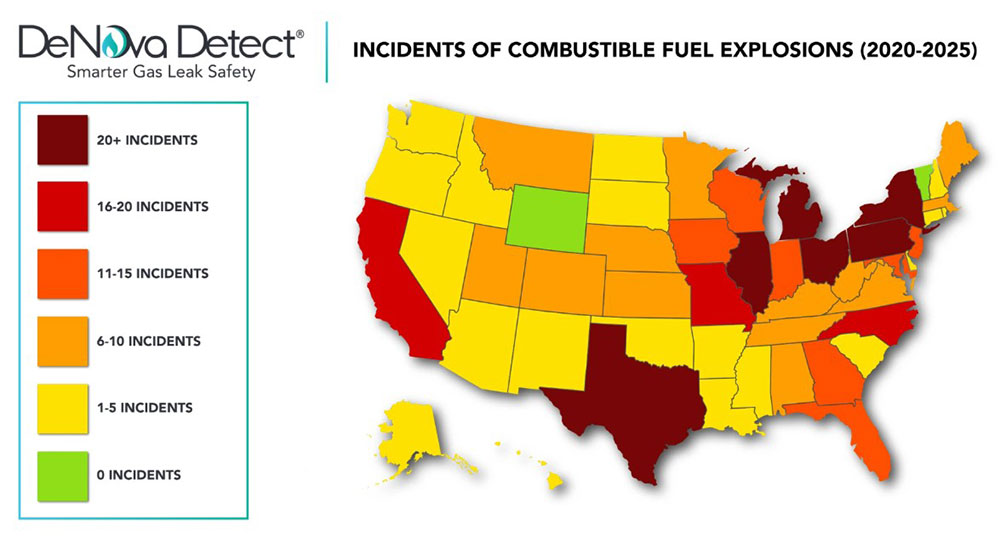
Why You Should Buy Natural Gas Alarms: The DeNova Detect Safety Advantage

Superior Detection Speed Against Widespread Fuel Explosion Events
DeNova Detect Early Warning: Why 10% LEL Natural Gas Alarms Save Lives

DeNova Detect Can Save You up to 37% When Compared to Natural Gas Plug-in Alarms
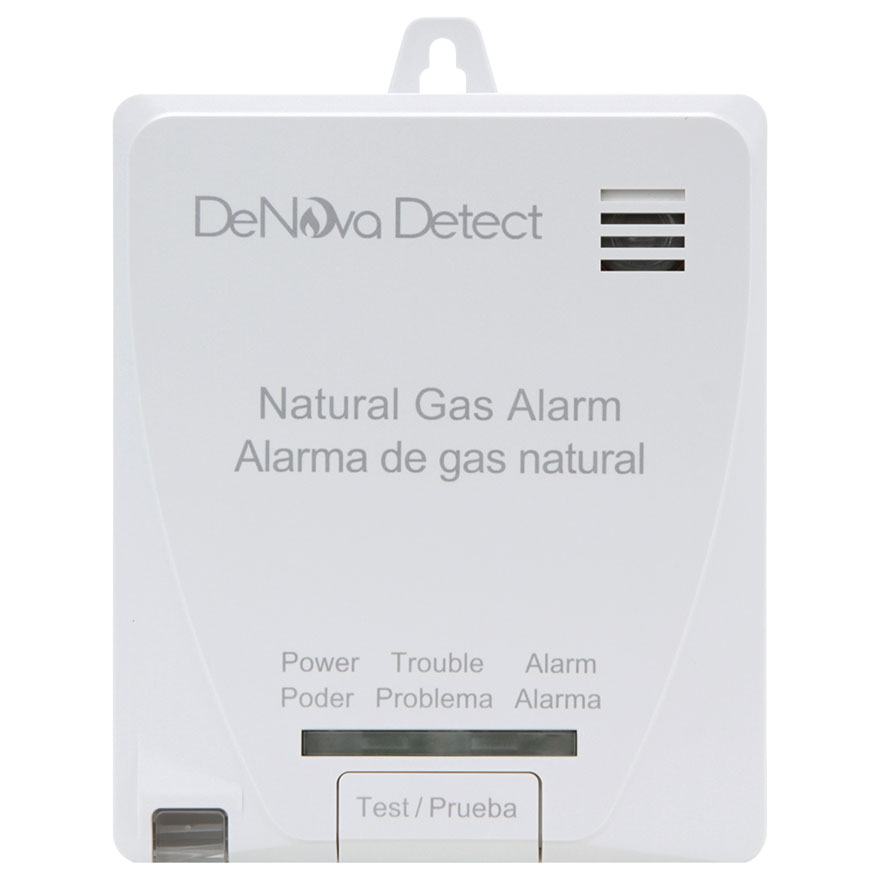
State of Maine Introduces New Natural Gas Alarm Law: Is Your Home Safe?
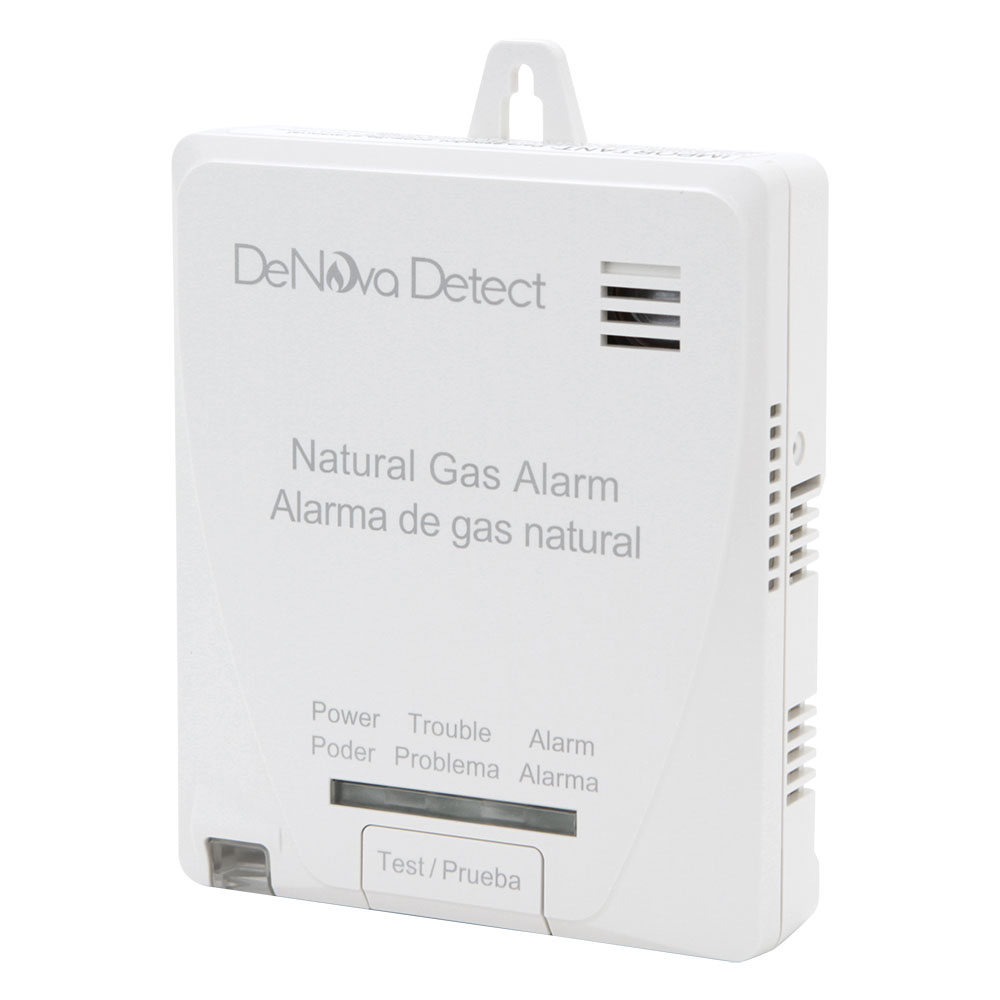
How to Protect Your Family from This Explosive Household Hazard
DeNova Natural Gas Alarms: Why & How You Should Protect Your Home
DeNova Natural Gas Alarm Features & Installation Guide